Showing posts with label Science. Show all posts

Wednesday, October 23, 2013

Polar Bear


Polar Bear (A Day in the Life:  Polar Animals), A Heinemann Library book, written by Katie Marsico, is another great nonfiction text for young readers.  A table of contents, glossary, and index help children understand this text even more.

The many photographs included in this book enhance the text.  Inset maps and labels also clarify the reading.  We enjoyed learning more specific facts from this book.


*What did you learn about polar bears?
*Which photographs helped you understand polar bears better?
*Is there anything more you would like to learn about polar bears?

Wednesday, October 16, 2013

A Rock is Lively


A Rock is Lively, written by Dianna Hutts Aston and illustrated by Sylvia Long, is another book written in the style of A Butterfly is Patient.  We also highly recommend this book! Its detailed illustrations and information make it a great nonfiction read.

A Rock is ________   is how each page begins.  Some of the adjectives used in the book are lively, helpful, surprising, inventive, etc.  One aspect we enjoyed was looking at how rocks were used as tools in various cultures. 

As is true with A Butterfly is Patient, the inside front and back covers add to the enjoyment of exploring this book.  Illustrations of rocks are found in the front, while the back inside cover displays the illustrations with the rocks’ names.  It’s great fun to have children try to learn to identify rocks by using these covers.


*Which rock is most interesting to you?
*Can you name some of the different cultures and how they used rocks?
*How would you describe a rock?

Wednesday, October 9, 2013

National Geographic Little Kids Ocean Counting


As children are being asked to read more nonfiction texts, it’s important to find books that capture their attention with interesting facts.  National Geographic Little Kids Ocean Counting, by Janet Lawler with photographs by Brian Skerry, is a great book for young children who are learning to count and who like ocean animals.  Primary readers will also enjoy the eye-catching photographs that accompany the text.

The reader counts to ten with examples of various ocean animals (hammerhead sharks, sea otters, pink sea star, etc.).  Each two page spread also includes a Did You Know? Box with an interesting fact about the animal.  At the conclusion of the book an Animal Facts section (home, size, food, predators, babies) are given about each animal.  A map and glossary are also included to extend learning.

This would be a great book to enjoy before and after a trip to an aquarium.  It would be fun for children to write their own counting book based on this book.  We hope you enjoy learning more about ocean animals!


*Which ocean animal is your favorite?
*Can you name 5 facts you learned by reading this nonfiction text?
*What fact surprised you?


Wednesday, October 2, 2013

A Butterfly is Patient


We’ve been looking for more nonfiction books and were very happy to find A Butterfly is Patient, written by Dianna Hutts Aston and illustrated by Sylvia Long.  This beautifully illustrated book begins each page with “A butterfly is…” and completes the sentence with vivid adjectives (protective, thirsty, patient, etc.).  Taking a picture walk (or several picture walks because there is so much to discover) will help the reader learn more about butterflies.

The illustrations are phenomenal in helping the reader visualize the meanings.  Maps and timelines also help the reader understand this nonfiction text.  An added bonus for us was seeing the inside front and back covers.  The front inside cover has detailed illustrations of caterpillars with their names while the back inside cover displays the butterflies with their names. 

This is a terrific book to begin a butterfly study and/or introduce young readers to nonfiction texts.  We highly recommend this book as a gift to your children!


*Which pages taught you most about butterflies?
*Which illustration do you like the best?
*How many of these butterflies have you seen?
*How would you describe a butterfly?

Saturday, September 28, 2013

Fireflies in the Night


Fireflies in the Night, written by Judy Hawes and illustrated by Ellen Alexander, is a wonderful book that uses the relationship between a grandfather and a granddaughter to teach the reader about fireflies.  The book is very informative while using a story format to help children learn more about the world of fireflies.  We liked learning how other cultures use fireflies in helpful ways.  If your child is interested in fireflies (or lightning bugs as we commonly call them) this is a great way to introduce them to the scientific aspects in a kid-friendly approach.  Happy reading!


*What did you learn about fireflies?
*What surprised you about how fireflies are used in other cultures?
*Could you write a story about your interactions with fireflies?

Wednesday, June 5, 2013

Why? The best ever question and answer book about nature, science, and the world around you


Why?  The best ever question and answer book about nature, science and the world around you, by Catherine Ripley and illustrated by Scot Ritchie, is a fun book to read and use for children’s questions. Questions that you may have heard are covered in this book.  The colorful illustrations add to the enjoyment of finding answers.  Here are examples of some of the kinds of questions that are found in the book:

Supermarket questions
  *Do the doors open by magic?
Nighttime questions
  *Why do stars twinkle?
Outdoor questions
  *Why do birds sing?
Kitchen questions
  *Why does popcorn pop?
Farm Animal questions
  *Why do pigs roll in the mud?

This is a great book for summer when you and your family might have more time to explore and read.  We recommend adding this to your home library so you can have a handy reference when any of those “Why?” questions pop up!  Have fun!

Monday, May 6, 2013

How Mountains Are Made


How Mountains Are Made, by Kathleen Weidner Zoehfeld and illustrated by James Graham Hale, is a nonfiction book that uses elements of fiction to convey facts.  This method appeals to many children, drawing them in to learn. We enjoyed all of the details in this book.

The story begins with a group of children climbing a mountain who find a rock with the shape of a seashell in it.  This discovery leads to the book’s illustrations and explanations of how mountains are formed.  The large number of labeled illustrations is of great help in visualizing the process. 

We recommend this book if your child is studying geology or is interested in earth science.  It would also make a great book to take on a family vacation to the mountains.  We hope you enjoy learning from it!


*What mountains have you seen?
*What did you learn about mountains?
*Which illustration could you explain in your own words?

Friday, May 3, 2013

Sunshine


Sunshine--A Book About Sunlight, by Josepha Sherman and illustrated by Jeff Yesh, is an easy to understand nonfiction book about sunlight.  The text and facts are presented in a kind-friendly format.  The main topics covered in the book are sunlight, moonlight, and rainbows.  A rainbow experiment, fast facts, and glossary are included to extend the concepts. 


*What did you learn about sunlight?
*What did you learn about moonlight?
*What’s your favorite fact about sunlight?

Monday, April 29, 2013

Gusts and Gales


We love discovering new nonfiction books.  Gusts and Gales--A Book About Wind, by Josepha Sherman and illustrated by Omarr Wesley, is a great book to introduce children to weather.  The opening question in the book asks about wind and then as the book unfolds, more is learned about winds (global and local), hurricanes, and tornadoes.  Also included in this book are directions about making a tornado, fast facts, and a glossary.  The glossary is a fun way for children to check their understanding.  The illustrations make this book a great tool!


*How does wind begin?
*What do you like to do when it’s windy?
*What facts did you learn about the wind?

Monday, February 4, 2013

Light: Shadows, Mirrors, and Rainbows


We’re enjoying adding more nonfiction to our reading times.  Light:  Shadows, Mirrors, and Rainbows, written by Natalie M. Rosinsky and illustrated by Sheree Boyd, is a great book that teaches so many facts about light. A fun, brightly colored format introduces something to learn about light (shadows, mirrors, or rainbows) in a real life situation.  Fun facts are included with each section to give more information.  Out of Sight experiments and enlightening facts are given at the conclusion of the book.  We found this book to be informative and enjoyable.  We hope you’ll like this nonfiction selection!


*What did you learn about light?
*Which fun fact is your favorite?
*Which activity would you like to learn more about?

Wednesday, January 16, 2013

National Geographic Little Kids First Big Book of Animals


We are trying to add more nonfiction books in our reading time and in our home library.  National Geographic Little Kids First Big Book of Animals has been a great choice!  There are over 120 pages full of information about animals from the grasslands, ocean, desert, forest, and polar regions. 

Each section (divided by the regions) includes large photographs accompanied with a definition of the area.  Several pages follow focusing on specific animals.  The superb photographs really pull in the reader’s attention.  A picture walk might be the best way to view this book initially.  There’s just so much that can be gained from studying the pictures!

Along with the oversized text, fact “cards” give information about the kind of animal, home, size, food, sounds, and babies.  Circles of text give more interesting facts about each animal.  We really like the questions that accompany the reading.   One example is:  How old were you when you learned to walk?  These questions really help readers make a connection to the animal’s life.

Two pages at the end of the book give parent tips to extend the reading experience.  Many are simple activities to help enrich a child’s learning.  An animal map is also found at the end of the book.  Continents are color-coded with a key to indicate which animals are found there.  Finally, a glossy provides a way to enrich your child’s vocabulary.

This animal book is one of the best we have found!  It’s a book that can be picked up to view, read, study, and research.  Children and adults will find a great example of nonfiction reading!  Enjoy!


*What surprised you most about animals in this book?
*Which animals would you like to see?
*Which photos do you like best?
*What words in the glossary helped you understand the book better?

Thursday, September 6, 2012

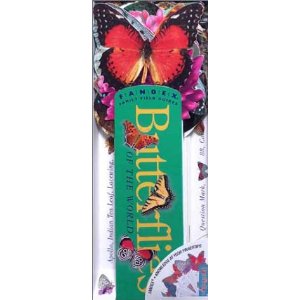
Butterflies of the World Fandex


Our family loves learning more about nature.  Books about butterflies, planting butterfly bushes, and outside observation have raised many questions about the types of butterflies we see.  Although we had several nature guides, we didn’t have any about butterflies.  We were very excited when we found the Butterflies of the World Fandex (published by Workman Publishing). 

This butterfly index is easy to use while it also invites you to learn more about butterflies.  The cards are attached at the bottom and fan out to show beautifully colored butterflies with information about them on the front and back of the card. The common name and scientific name are given for each butterfly.  Accompanying illustrations on each card vary with each butterfly displaying examples of eggs, pupa, chrysalis, caterpillars, or close-ups.  Some cards have insets on the back that give more narrative information.  The backs of the cards also contain field notes that tell the family, species, describer, time of flight, habitat, range, and wingspan.

This fandex has given us hours of learning and fun!  Butterflies have been identified, lists have been made, and drawings have been accomplished since we started using this fandex.  If you want to learn more about butterflies, this is a great source!

Friday, May 11, 2012

Ladybugs, Red, Fiery, and Bright


We are always looking for interesting nonfiction books to add to our library.  We also like rhyming books and beautifully illustrated books. Ladybugs, Red, Fiery, and Bright, by Mia Posada, is all of these things.

This is a perfect book to do a picture walk so you and your children can enjoy the beautiful illustrations first.  The first few pages describe ladybugs in general followed by descriptions and illustrations of the life cycle of ladybugs.  We liked learning new vocabulary (larvae, molting, etc.) and the follow-up section at the back of the book that shows different kinds of ladybugs.  This is a great book to add to your nonfiction collection!


*What did you learn about ladybugs?
*Can you find some rhyming words used in the book?
*Have you seen different kinds of ladybugs?

Friday, January 20, 2012

Animal Babies in Polar Lands


We have lots of fictional books about snow, snowmen, and snow animals.  One of our reading goals is to include more nonfiction.  Animal Babies in Polar Lands, by Jennifer Schofield, is a delightful book that introduces children to learning more about polar animals. 

The first page about each animal presents a close-up photograph of a baby animal with information about the animal and closes with a question about the mommy’s identity.  The next pages show the baby animal with its mother and give the baby’s name (such as pup, chick, etc.).  The superb photographs along with the factual information make this a great book to introduce nonfiction to your reading time with your children.  We re-read this book often because it’s so enjoyable.  We hope you learn from it too!


*Which animal is your favorite?
*Which animal looks most like its mommy? 
*Which animal looks least like its mommy?
*Can you remember the names of the baby animals?