Showing posts with label Nature. Show all posts

Thursday, October 31, 2013

The Pumpkin Book


The Pumpkin Book, by Gail Gibbons, is a great resource for a nonfiction look at pumpkins.  We like to start looking at books like this by taking a picture walk. We enjoyed seeing the labeled illustrations of different kinds of pumpkins. Even young children can begin to develop an understanding of the growth of a pumpkin from the interesting pictures in this book. 

Ways to plant pumpkins in a patch and on a farm are described by Gibbons.  Various aspects of what is needed in nature for successful pumpkin growth is also discussed.  The book also shows the use of pumpkins at Halloween and Thanksgiving times.  

Older children could use this book to develop charts about pumpkin development.  The illustrations delightfully explain the text so that listeners/viewers/readers can all enjoy learning. We found this to be a great book to add to our autumn reading. We love reading books by Gail Gibbons and hope you enjoy this one, too!


*Which pumpkin varieties have you seen before?
*Can you explain how a pumpkin seed grows?
*What’s your favorite use of pumpkins?  Why?

Wednesday, October 23, 2013

Polar Bear


Polar Bear (A Day in the Life:  Polar Animals), A Heinemann Library book, written by Katie Marsico, is another great nonfiction text for young readers.  A table of contents, glossary, and index help children understand this text even more.

The many photographs included in this book enhance the text.  Inset maps and labels also clarify the reading.  We enjoyed learning more specific facts from this book.


*What did you learn about polar bears?
*Which photographs helped you understand polar bears better?
*Is there anything more you would like to learn about polar bears?

Wednesday, October 16, 2013

A Rock is Lively


A Rock is Lively, written by Dianna Hutts Aston and illustrated by Sylvia Long, is another book written in the style of A Butterfly is Patient.  We also highly recommend this book! Its detailed illustrations and information make it a great nonfiction read.

A Rock is ________   is how each page begins.  Some of the adjectives used in the book are lively, helpful, surprising, inventive, etc.  One aspect we enjoyed was looking at how rocks were used as tools in various cultures. 

As is true with A Butterfly is Patient, the inside front and back covers add to the enjoyment of exploring this book.  Illustrations of rocks are found in the front, while the back inside cover displays the illustrations with the rocks’ names.  It’s great fun to have children try to learn to identify rocks by using these covers.


*Which rock is most interesting to you?
*Can you name some of the different cultures and how they used rocks?
*How would you describe a rock?

Wednesday, October 2, 2013

A Butterfly is Patient


We’ve been looking for more nonfiction books and were very happy to find A Butterfly is Patient, written by Dianna Hutts Aston and illustrated by Sylvia Long.  This beautifully illustrated book begins each page with “A butterfly is…” and completes the sentence with vivid adjectives (protective, thirsty, patient, etc.).  Taking a picture walk (or several picture walks because there is so much to discover) will help the reader learn more about butterflies.

The illustrations are phenomenal in helping the reader visualize the meanings.  Maps and timelines also help the reader understand this nonfiction text.  An added bonus for us was seeing the inside front and back covers.  The front inside cover has detailed illustrations of caterpillars with their names while the back inside cover displays the butterflies with their names. 

This is a terrific book to begin a butterfly study and/or introduce young readers to nonfiction texts.  We highly recommend this book as a gift to your children!


*Which pages taught you most about butterflies?
*Which illustration do you like the best?
*How many of these butterflies have you seen?
*How would you describe a butterfly?

Saturday, September 28, 2013

Fireflies in the Night


Fireflies in the Night, written by Judy Hawes and illustrated by Ellen Alexander, is a wonderful book that uses the relationship between a grandfather and a granddaughter to teach the reader about fireflies.  The book is very informative while using a story format to help children learn more about the world of fireflies.  We liked learning how other cultures use fireflies in helpful ways.  If your child is interested in fireflies (or lightning bugs as we commonly call them) this is a great way to introduce them to the scientific aspects in a kid-friendly approach.  Happy reading!


*What did you learn about fireflies?
*What surprised you about how fireflies are used in other cultures?
*Could you write a story about your interactions with fireflies?

Monday, July 29, 2013

Wave


Wave, by Suzy Lee, is a beautiful, wordless picture book!  Through the use of a few colors (blue, gray, and white), a story is told about a girl and her experiences with a wave.  This is a book you’ll want to pick up again and again to look for details and to experience how a child discovers her natural world.  From seeing the girl splashing in the water at the beach to sticking her tongue out at the wave, the reader feels like he/she is at the beach along with the girl.  A beach trip would provide a great opportunity to introduce this book to a child.  Enjoy this fun book with your family!


*Which scene is your favorite?
*What do you think the girl is thinking?
*What do you think the girl will do the next time she’s at the beach?

Wednesday, June 5, 2013

Why? The best ever question and answer book about nature, science, and the world around you


Why?  The best ever question and answer book about nature, science and the world around you, by Catherine Ripley and illustrated by Scot Ritchie, is a fun book to read and use for children’s questions. Questions that you may have heard are covered in this book.  The colorful illustrations add to the enjoyment of finding answers.  Here are examples of some of the kinds of questions that are found in the book:

Supermarket questions
  *Do the doors open by magic?
Nighttime questions
  *Why do stars twinkle?
Outdoor questions
  *Why do birds sing?
Kitchen questions
  *Why does popcorn pop?
Farm Animal questions
  *Why do pigs roll in the mud?

This is a great book for summer when you and your family might have more time to explore and read.  We recommend adding this to your home library so you can have a handy reference when any of those “Why?” questions pop up!  Have fun!

Monday, May 6, 2013

How Mountains Are Made


How Mountains Are Made, by Kathleen Weidner Zoehfeld and illustrated by James Graham Hale, is a nonfiction book that uses elements of fiction to convey facts.  This method appeals to many children, drawing them in to learn. We enjoyed all of the details in this book.

The story begins with a group of children climbing a mountain who find a rock with the shape of a seashell in it.  This discovery leads to the book’s illustrations and explanations of how mountains are formed.  The large number of labeled illustrations is of great help in visualizing the process. 

We recommend this book if your child is studying geology or is interested in earth science.  It would also make a great book to take on a family vacation to the mountains.  We hope you enjoy learning from it!


*What mountains have you seen?
*What did you learn about mountains?
*Which illustration could you explain in your own words?

Friday, May 3, 2013

Sunshine


Sunshine--A Book About Sunlight, by Josepha Sherman and illustrated by Jeff Yesh, is an easy to understand nonfiction book about sunlight.  The text and facts are presented in a kind-friendly format.  The main topics covered in the book are sunlight, moonlight, and rainbows.  A rainbow experiment, fast facts, and glossary are included to extend the concepts. 


*What did you learn about sunlight?
*What did you learn about moonlight?
*What’s your favorite fact about sunlight?

Monday, April 29, 2013

Gusts and Gales


We love discovering new nonfiction books.  Gusts and Gales--A Book About Wind, by Josepha Sherman and illustrated by Omarr Wesley, is a great book to introduce children to weather.  The opening question in the book asks about wind and then as the book unfolds, more is learned about winds (global and local), hurricanes, and tornadoes.  Also included in this book are directions about making a tornado, fast facts, and a glossary.  The glossary is a fun way for children to check their understanding.  The illustrations make this book a great tool!


*How does wind begin?
*What do you like to do when it’s windy?
*What facts did you learn about the wind?

Wednesday, April 17, 2013

Echoes for the Eye


Celebrate National Poetry Month!  Echoes for the Eye (Poems to Celebrate Patterns in Nature), by Barbara Juster Esbensen and illustrated by Helen K. Davie, is a fun book to celebrate poetry and nature.  We like to look for patterns in nature so this book was especially interesting to us.  Esbensen categorizes the patterns of nature into the following categories:  Spirals, Branches, Polygons, Meanders, and Circles.  Examples of poems in the Branches category are poems about veins and lightning.  This book is a thought provoking collection!  The illustrations encourage a picture walk, possibly before and after reading.  We hope you enjoying reading and viewing these poems!


*What’s your favorite poem?  Picture?
*What patterns surprised you?
*Can you think of other patterns?

Friday, April 12, 2013

The Wild Little Horse


A fictional book about a horse that we like to read is The Wild Little Horse, by Rita Gray and illustrated by Ashley Wolff.  The reader follows the journey of a young horse as he listens to the wind, which encourages him to run.  The story is told in rhyme and uses much onomatopoeia to add to the feeling of running with the horse.  The softly illustrated pages add to the beauty of the story.  The Wild Little Horse is a book that can be enjoyed over and over.  We hope you like this beautiful story!


*Which words did the author use to make you hear the sounds?
*Can you name all of the other animals in the story?
*How do you think the wild little horse felt as he was running?

Wednesday, April 10, 2013

American Dream Horses


American Dream Horses is a great reference book to add to your nonfiction library.  Any child who likes to learn more about horses will find this book interesting and helpful.  We love looking at the different kinds of horses (21 are listed) to find more information.  Younger children may enjoy a picture walk through this book.  Older children can find many facts and details to add to their knowledge of horses.

Each kind of horse is shown in photographs that accompany a passage (usually a page long) telling the history of the horse.  Additional information is given on descriptions, uses and gaits.  Captions depicted in circles give the height and colors.  We love having guide books such as this to help us learn more about subjects and to accompany fictional stories.  We think you’ll find this book interesting!


*Which horse is your favorite?
*Which kinds of horses have you seen?
*Can you make a timeline of these horses?
*How did the categories help you learn more? 

Monday, April 8, 2013

Horses


Does your child love horses?  We’re starting a week of looking at books about horses, one of our current interests!  Horses, by Monica Kulling, is a shape book that introduces children to the world of horses.  The birth of a baby horse, a foal, starts the reader on a journey to learn more about horses and the world in which they live. The illustrations by Betina Ogden are beautiful pictures that invite the reader to study and examine each detail of a horse’s life.  We enjoyed learning about the grooming and care of horses.  Vocabulary is introduced throughout the story in a way that encourages readers to use the text to determine meaning.  If your child is interested in horses, this is a great book to introduce them to various kinds of horses and the vocabulary used in talking about horses.  Enjoy!


*Which picture is your favorite?
*What new words did you learn from this book?
*What is involved in taking care of a horse?

Tuesday, April 2, 2013

Mossy


Mossy, by Jan Brett, is a story about an Eastern box turtle and its removal from its environment.  Mossy follows Brett’s signature illustrations with beautifully drawn pictures and details.  Mossy is removed from its environment to a museum because of the interest of the curator (Dr. Carolina) in the garden growing on Mossy’s shell.  Mossy’s sadness moves Dr. Carolina’s niece, Tory, to find a way for children to see the garden while returning Mossy to its natural environment.  Readers can quickly infer the effects of removing an animal from its natural habitat. 

We especially liked all of the details given about nature.  This is a great book for children who are interested in nature and like to study pictures.  Each page can be reviewed many times to find details overlooked the first time.  Jan Brett continues to be one of our favorite authors!


*Which illustration do you like best?
*How do you think Mossy feels at the beginning, middle, and end of the story?
*Which illustration wants you to learn more about nature?

Wednesday, March 27, 2013

Queen of Easter


Queen of Easter, by Mary Engelbreit,  tells the story of Ann Estelle as she receives a new Easter hat.  The hat is not to Ann Estelle’s liking; it is not fancy enough for the neighborhood parade.  When she leaves the hat behind on the porch, it becomes a nest for a robin.  Ann Estelle then uses her creativity with an old Easter hat in a charming ending to the story.  We so enjoyed seeing how Ann Estelle solved her dilemma in such a positive way!


*How did Ann Estelle change her mind about her hat?
*Were you surprised at what happened to her new hat?
*What do you think people thought about her sign?
*How would you decorate an Easter hat?


Monday, March 18, 2013

Wake Up, It's Spring!


Wake Up, It’s Spring!, by Lisa Campbell Ernst, is a beautiful book that has a succession of characters who tell each other that it’s Spring.  It’s fun to follow the progression of each character as they tell the next one about Spring.  The author uses very vivid verbs making this story a great mentor text for writing.  Retelling this story is fun because each scene builds to the next.  Making a chart/timeline would help children develop the story for retelling.  Most of all, it’s just a fun way to introduce Spring!


*Can you retell the story?
*What descriptive words does the author use?
*What’s your favorite scene in the book?


Friday, November 16, 2012

The Leaves on the Trees


Learning more about nature is a high priority in our home!  We love to look at nature guides to learn more, but it is often difficult to find simple words and illustrations.  The Leaves on the Trees, by Thom Wiley, is a good way to introduce leaf identification to young children.  The simple text is accompanied by illustrations of different kinds of leaves as seen in the fall.  The repeating refrain that autumn is here reinforces the changes that are taking place in the leaves’ color.   This is a great book to take along on an autumn walk!


*How many of the leaves can you find?
*Which leaf is your favorite?
*Are there any other ways to describe the different kinds of leaves?

Monday, October 22, 2012

If Rocks Could Sing, A Discovered Alphabet


If Rocks Could Sing, A Discovered Alphabet is a beautiful, nature-filled alphabet book!  The author, Leslie McGuirk, in her “Rock Talk” talks about looking for rocks on the Florida seashore for ten years to find rocks that resembled letters.  She found all of the letters except “X” which was found in Maine.  The beauty of this book is that each rock letter is represented by other rocks that look like specific objects.  For example, the letter “P” stands for penguin, and there’s a rock shaped like a penguin on the page.

We found this to be a glorious book depicting the wonders of nature.  We picked it up to read another alphabet book but discovered amazement at rock formations.  We hope you have to chance to look at and enjoy this creative book!


*Which rock letter is the most unusual to you?
*Which rock object do you like the best?
*Which do you think was the hardest to find?
*Would you like to look for rocks that look like letters?

Read more children's ABC books here!

Thursday, September 6, 2012

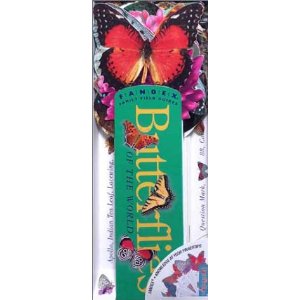
Butterflies of the World Fandex


Our family loves learning more about nature.  Books about butterflies, planting butterfly bushes, and outside observation have raised many questions about the types of butterflies we see.  Although we had several nature guides, we didn’t have any about butterflies.  We were very excited when we found the Butterflies of the World Fandex (published by Workman Publishing). 

This butterfly index is easy to use while it also invites you to learn more about butterflies.  The cards are attached at the bottom and fan out to show beautifully colored butterflies with information about them on the front and back of the card. The common name and scientific name are given for each butterfly.  Accompanying illustrations on each card vary with each butterfly displaying examples of eggs, pupa, chrysalis, caterpillars, or close-ups.  Some cards have insets on the back that give more narrative information.  The backs of the cards also contain field notes that tell the family, species, describer, time of flight, habitat, range, and wingspan.

This fandex has given us hours of learning and fun!  Butterflies have been identified, lists have been made, and drawings have been accomplished since we started using this fandex.  If you want to learn more about butterflies, this is a great source!